The Easton Club Golf Course Didn't Close. It Got Settled.
September 17, 2026
September 17, 2026
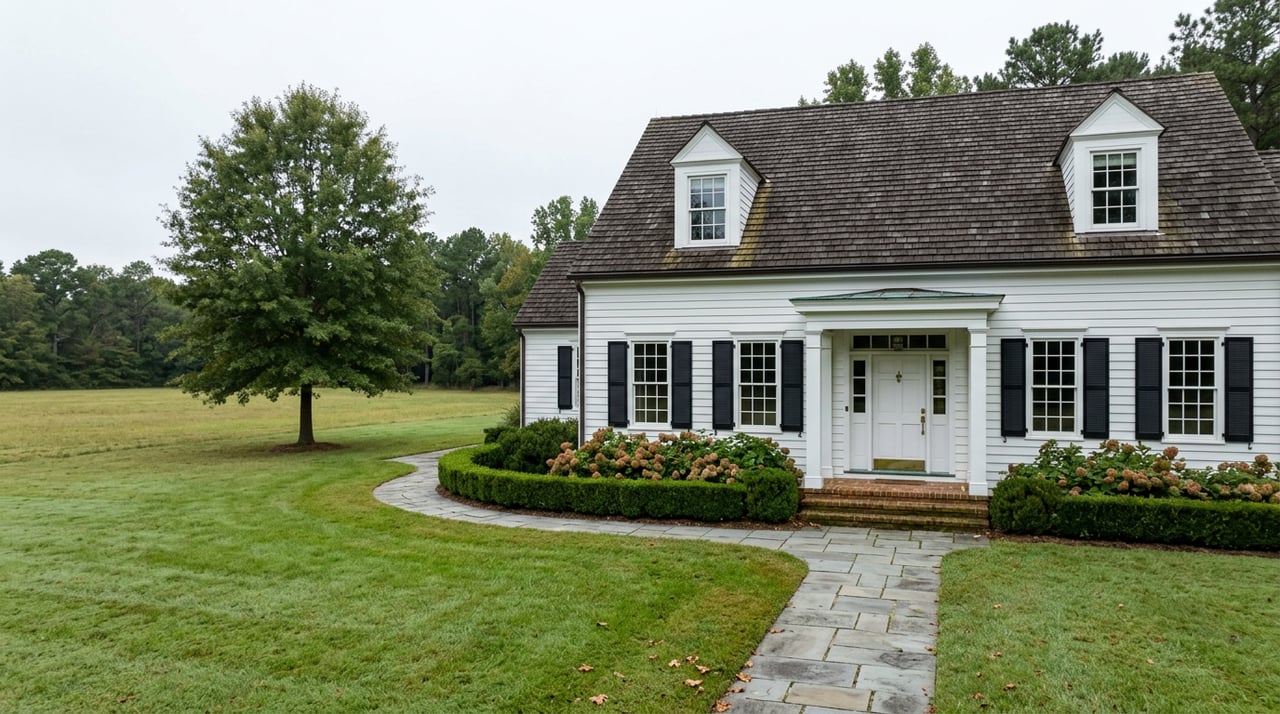
A resident walking her dog across the old fairways off Clubhouse Drive made it into a Talbot County newspaper photo back in February 2021, an image tucked into coverage of a lawsuit settlement nobody in the neighborhood had asked for but everyone had been waiting on. The caption barely needed words. Grass, mowed low. A dog on a leash. A course with no golfers, no flags, no cart paths in use, being walked the way you'd walk a park.
More than five years later, that description still holds. If you live in Easton Club, off Oxford Road on the Tred Avon side of town, you already know the 180 acres in the middle of the community aren't a golf course anymore, haven't been since 2015, and yet nothing else has visibly replaced it either. No wellness center. No villas. No agri-buildings. Just open ground, ponds, tree lines, and sidewalks that the Easton Club Community Association still describes as ideal for a peaceful walk or an energizing run.
The question worth asking isn't what's supposed to go there. It's why, after a legal settlement and a public hearing that should have settled the matter one way or another, the land still sits exactly as it did the week that photo ran.
The course had already passed through several owners before anyone in Easton Club needed to worry about its future. Easton Golf Club LLC sold the property to the University of Maryland College Park Foundation in 2008, which turned around and sold it again almost immediately to Easton Golf LLC. That ownership suspended play in 2015, and the course went into foreclosure. Maryland Health Club LLC, a company with no prior track record running a golf course, bought the land at a foreclosure auction in 2016 for $1.2 million.
What MHC did next is where the neighborhood's real story starts. The company told residents in August 2016 that the existing dining facility would reopen by that November and that it intended to restore the course itself. Neither happened. The clubhouse stayed closed. The fairways stayed unmowed enough that by 2018 the Easton Club Community Association filed suit in Talbot County Circuit Court, not to force MHC out, but to force it to either maintain the golf course properly or stop treating the land as its own private option.
The lawsuit didn't end with a winner in the way residents may have expected. The settlement, reached in late January 2021, gave MHC something it had been asking for all along: the right to stop operating the property as a golf course entirely, in exchange for a short list of obligations. MHC agreed to cut the grass, manage the stormwater, and keep the community's walking trails passable. That's the whole of it. Nothing in the settlement set a deadline for MHC to build anything, and nothing required the company to submit plans within a fixed window. The agreement also preserved MHC's right to convert the land back into a golf course later, if that ever penciled out financially, but created no obligation to do that either.
That detail matters more than the headline it generated at the time. A settlement built around minimum upkeep, rather than a construction timeline, doesn't resolve the uncertainty over what happens to the land. It just makes the uncertainty cheap to maintain. MHC can mow a field indefinitely and remain in full compliance with a legally binding agreement, whether or not a single permit ever gets pulled.
Here's the short version of how the property moved from an operating course to an open question with no fixed answer:
Nearly two years after the settlement, MHC filed to amend the property's planned unit development, and the scale of what it proposed surprised a lot of people who'd assumed "wellness park" meant something closer to a spa. The filing described a three-story multi-purpose building of nearly 91,000 square feet, with a parking garage, a pool, ten guest suites tied to a wellness program, a restaurant and bar, and additional lodging suites on top of that. Two agri-buildings rounded out the site plan, alongside a clubhouse renovation that would add a catering kitchen and three suites for brides booking the pavilion, and a separate pavilion renovation adding its own hospitality and lounge space.
At the Easton Planning Commission's December 15, 2022 hearing, more than a dozen residents spoke against it. The objections weren't reflexive. A resident identified in coverage of the hearing as Frei raised a specific engineering concern that the proposed stormwater retention system could short-circuit the existing storm line and worsen flooding on Clubhouse Drive, an area already prone to standing water. Lynn Mielke, a Talbot County Council member and twelve-year Easton Club homeowner who sits on the community's PUD committee, walked the commission through MHC's history: the broken 2016 promise about the dining facility, a pattern of late state property tax payments, and a request that the commission weigh whether a company with that record should be trusted to build and maintain something this large.
The 2021 settlement didn't decide what happens to this land. It decided that nothing happening would cost the owner nothing.
The commission didn't rule that night. It kept the public comment period open through January and scheduled MHC to respond in mid-February 2023, with a final vote to follow.
That's the part that hasn't made news since, because there hasn't been news to make. The Easton Club Community Association's own website still lists the Maryland Health Club renderings and document folders from the 2022 proposal as the most substantive item in its public record. Above that sit routine newsletters posted through most of 2025 and into January 2026, and none of them announce an approval, a denial, or a groundbreaking. If the planning commission reached a final decision after that February 2023 rebuttal, it hasn't shown up anywhere the association has chosen to publish.
That silence isn't a sign that something is quietly moving forward behind the scenes. Given how the settlement was written, silence is precisely what compliance looks like. MHC's only enforceable duties are mowing, stormwater management, and keeping the trails walkable. As long as those three things happen, the company owes the neighborhood nothing further, on no schedule, indefinitely.
If you've lived in Easton Club through any part of the last decade, the open ground bordered by wooded lots and reflecting ponds probably stopped feeling like a paused project years ago. It reads now the way any long-standing feature of a neighborhood reads: the place where people walk dogs, where the streetlights come on at dusk along the sidewalks, where a jogger has the loop mostly to herself on a weekday morning. That's not a temporary condition waiting on permits. Under the terms MHC and the association actually agreed to, it can remain exactly this way for as long as building something new isn't worth more to the owner than mowing a field.
None of that makes the acreage meaningless to the neighborhood around it. It just means the next real update, whether that's construction equipment, a new filing, or a quiet return to golf, will come on MHC's timeline, not the community's, because that's the only timeline the settlement ever created.
If you're weighing what any of this means for a home in Easton Club, whether you already live there or you're looking at the neighborhood from the outside, it helps to talk to someone who has watched Talbot County's PUDs, easements, and community associations evolve for decades rather than reading the file cold. Chuck Mangold, Jr. at Shore Luxury has spent more than 24 years working this exact stretch of the Mid-Shore, and he's glad to walk through what a story like this one actually means for a specific address, not just the neighborhood in general.


Get assistance in determining current property value, crafting a competitive offer, writing and negotiating a contract, and much more. Contact me today.